


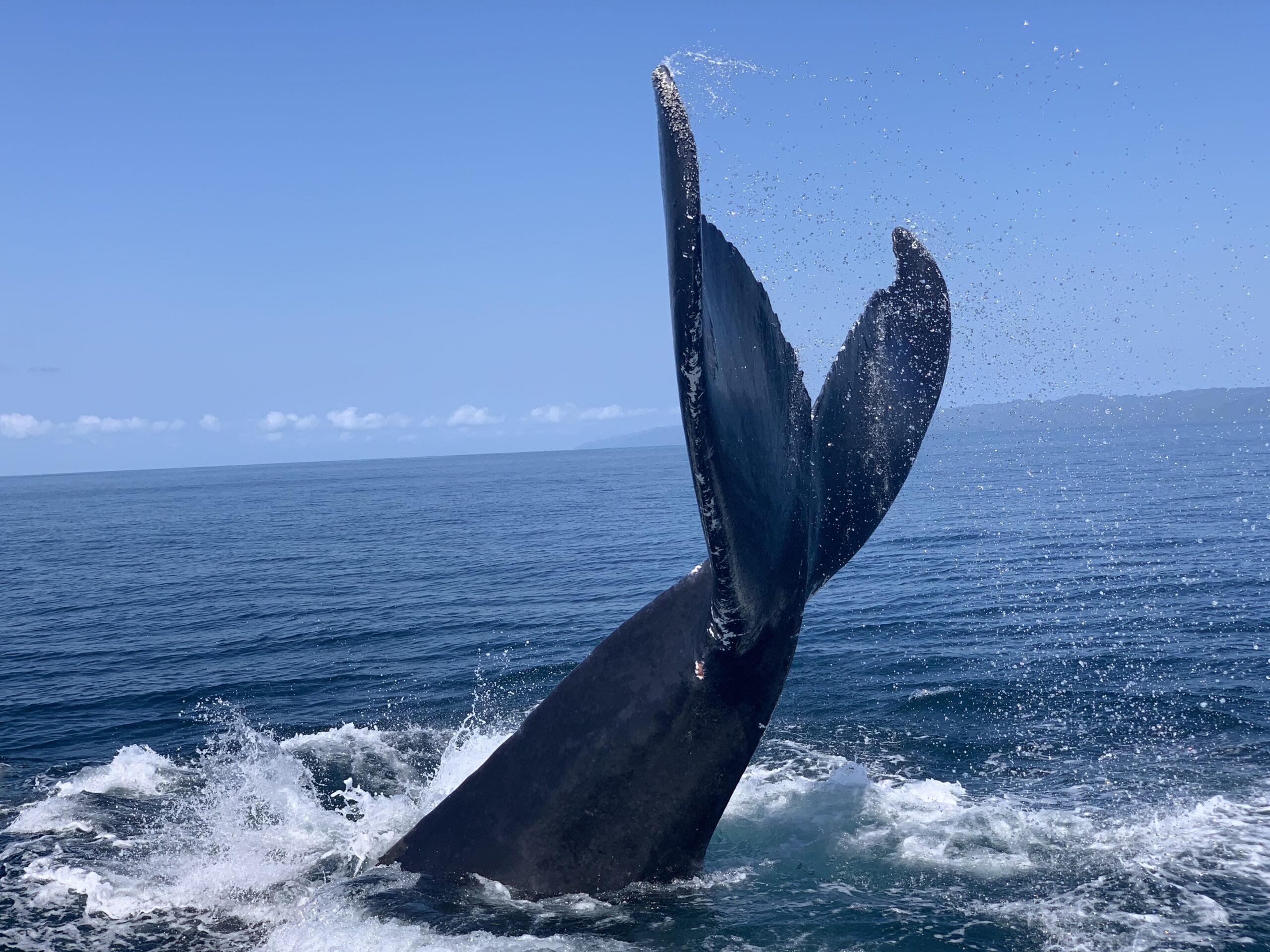
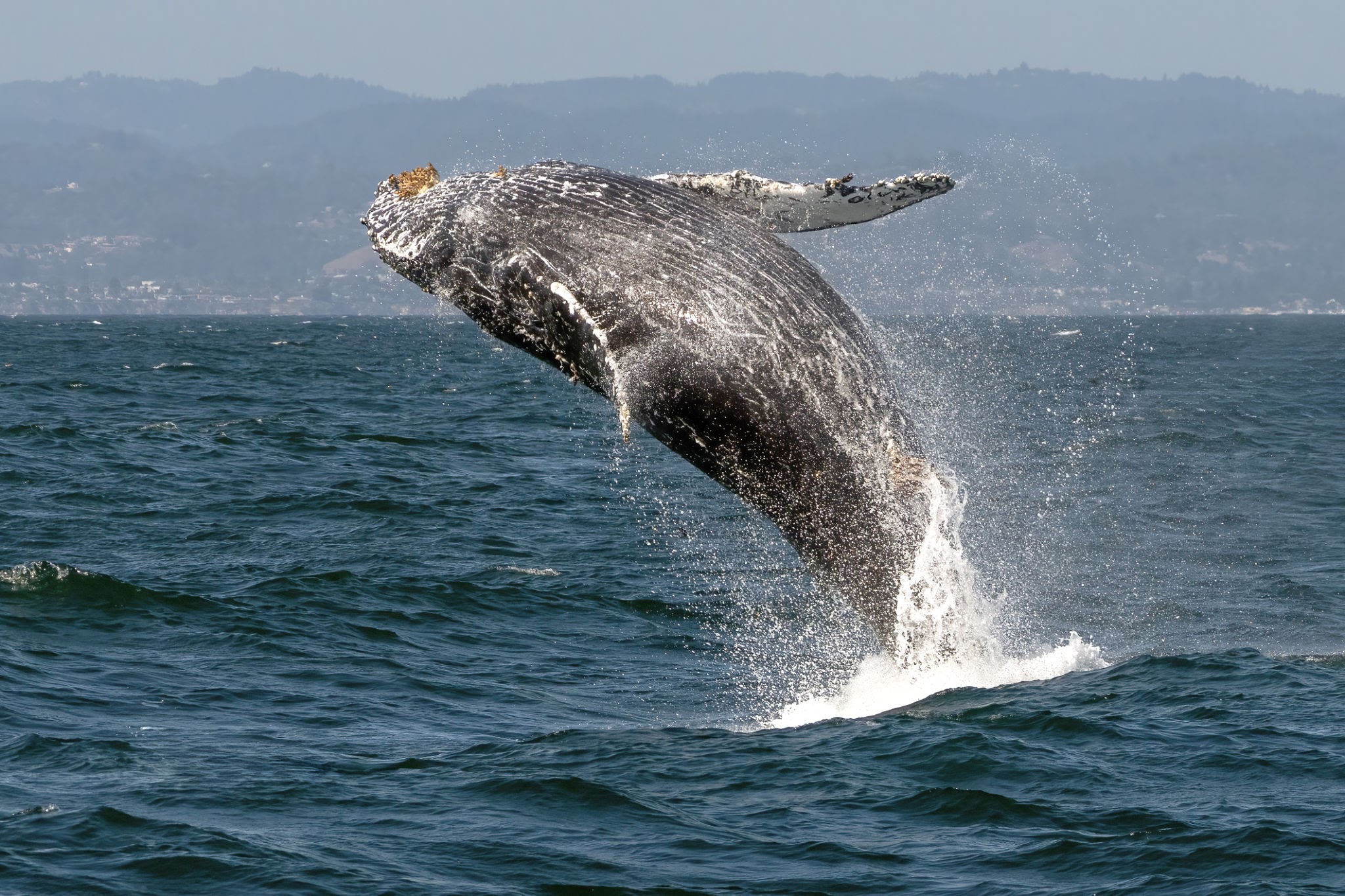
What you see: The whale propels most (or all) of its body out of the water and lands on its back or side, creating a massive splash.
What it means: While it looks like pure fun, it is often a display of physical fitness. Males frequently use it to impress females or intimidate rival males. It is also believed to help remove parasites from their skin or simply to communicate over long distances, as the sound of the impact travels for kilometers underwater.
Fun Fact: A humpback whale needs to reach a speed of about 30 km/h (18 mph) underwater to achieve this launch!
What you see: The whale lifts its tail out of the water and slaps it forcefully against the surface repeatedly. Slap! Slap!
What it means: This is a bold move. It can be a sign of aggression between males competing for dominance ("Stay away, this is my space!") or a way to mark territory. Sometimes, females also do this to alert the pod of danger or a change in the environment.
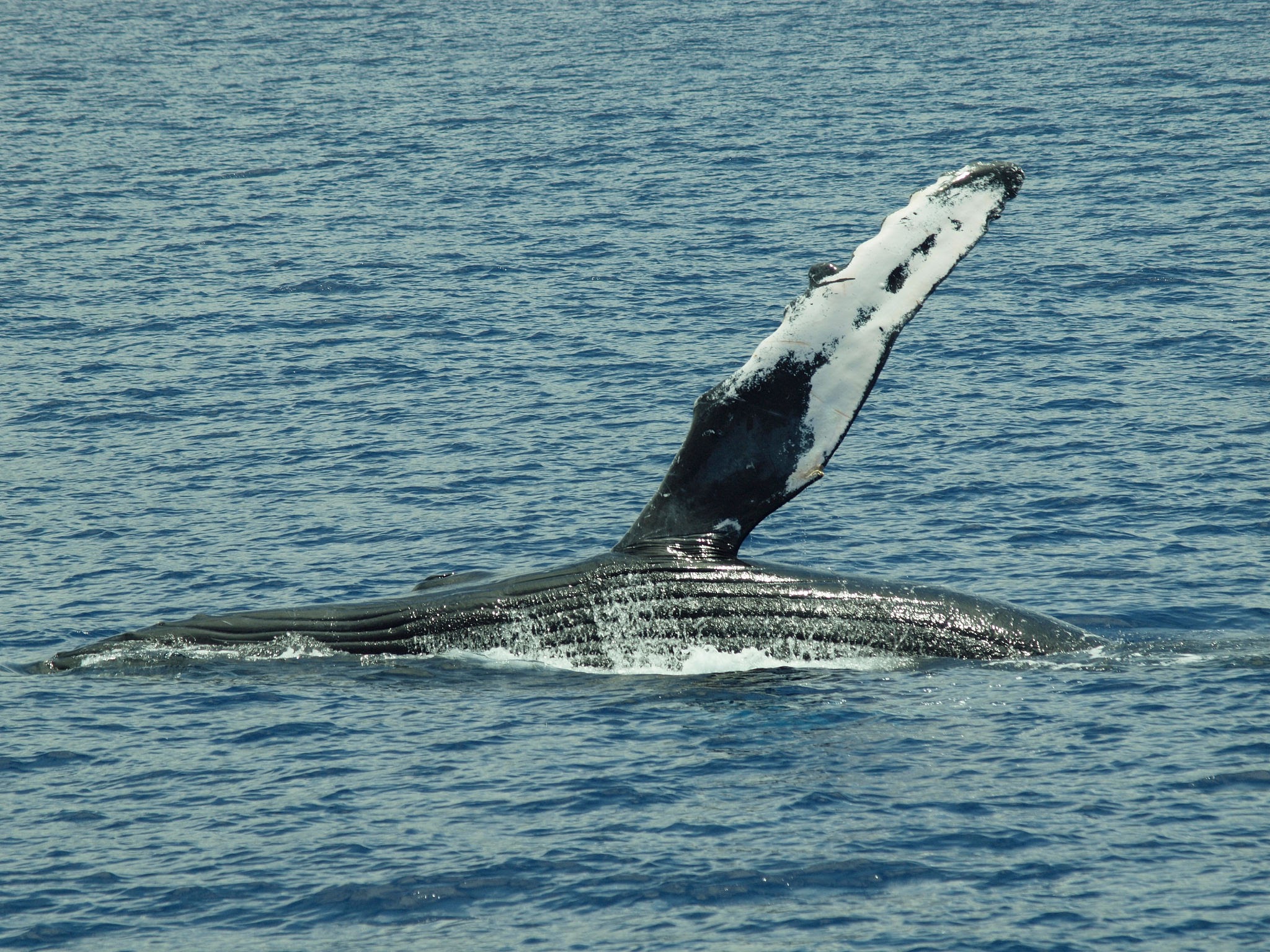
What you see: The whale rolls onto its side, lifts one of its long pectoral fins (which can measure up to 5 meters or 15 feet), and drops it onto the water.
What it means: This is often associated with courtship. It serves as both a visual and auditory signal to attract attention. You will often see females performing this movement in an almost "flirtatious" manner, rolling gently while slapping the water. It is one of the most elegant behaviors to observe.

What you see: The whale pokes its head vertically out of the water, acting like a periscope, and holds it there for a few seconds, often rotating slowly.
What it means: Pure curiosity. Unlike other behaviors, in this moment, the whale is looking at us. Their eyes are positioned in such a way that, by lifting their head, they can see perfectly what is happening on the boats. It is an incredible moment of connection between human and animal.

What you see: A cloud of mist shooting several meters into the air when the whale surfaces to breathe.
What it means:This is the easiest sign to spot from a distance. It isn't water they are expelling, but hot air from their lungs condensing as it meets the cooler outside air.
Expert Eye: Humpback blows are "bushy" or balloon-shaped, unlike other whales that have a straight, column-like spout.