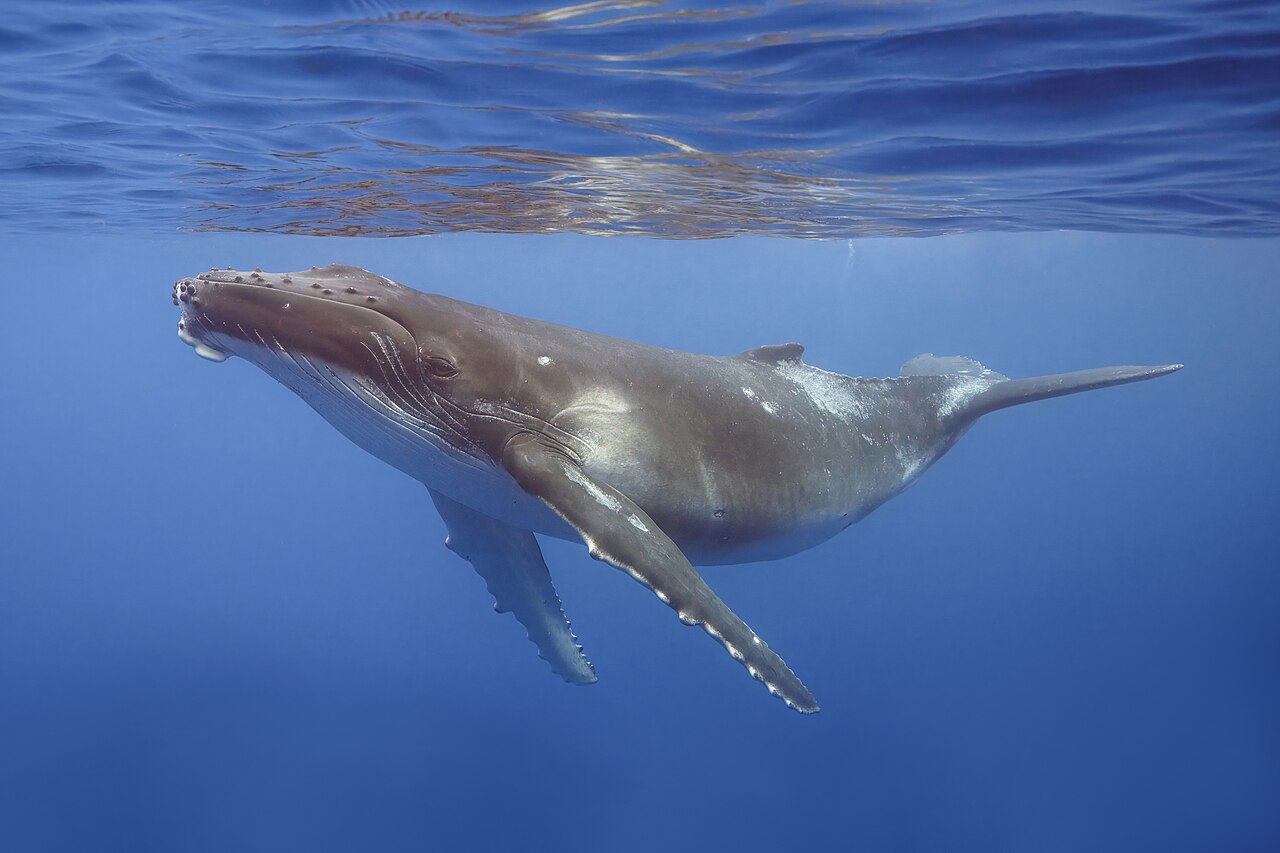
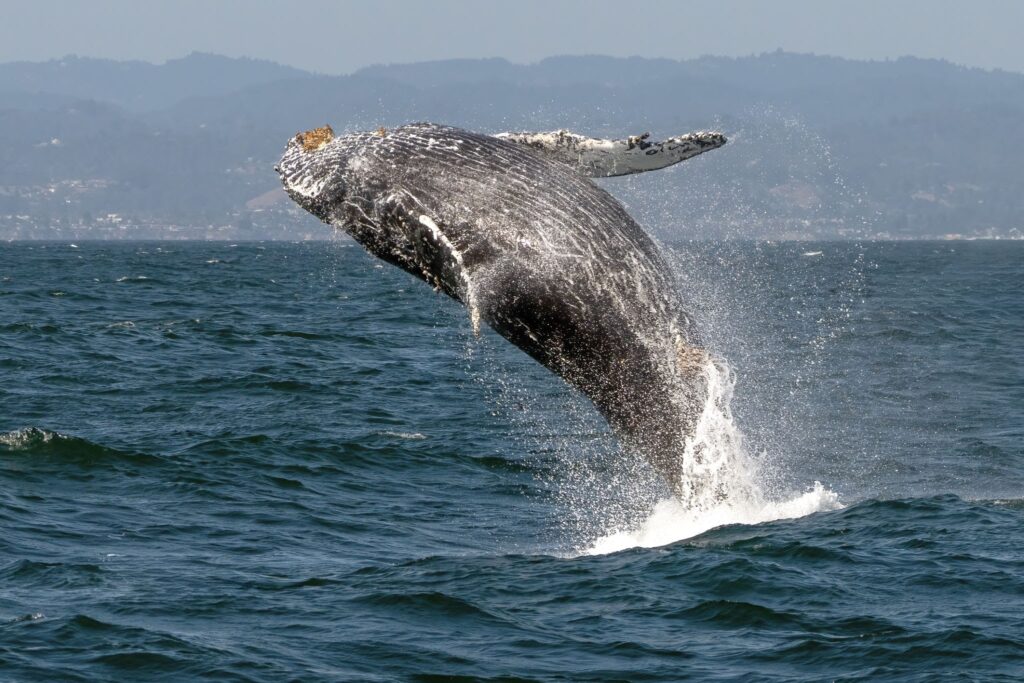
One of the most shocking facts for our guests is learning that during their entire stay in the Caribbean—which can last several months—the adult Humpback whales do not eat. Not a single fish. The waters of the Caribbean are crystal clear and beautiful, but compared to the nutrient-rich, murky waters of the North, they are practically a food desert for whales.
So, how do they survive? They run entirely on their “batteries.” Before migrating south, Humpbacks spend the summer gorging on krill and small fish, building up a massive layer of blubber. During their time in Samaná, they burn through these fat reserves to fuel their mating, birthing, and active behaviors. By the time they return north, a mother whale may have lost up to a third of her body weight.
The incredible energy cost of the season:
Mothers: They must produce up to 50 gallons of milk a day for their calves while starving themselves.
Males: They spend immense energy fighting rivals and singing for hours, all on an empty stomach.
The Calves: They are the only ones eating! They consume rich milk to gain nearly 100 pounds every single day.
This sacrifice highlights the importance of the Samaná sanctuary. They give everything they have to ensure their species continues here.
Come support eco-friendly tourism. Join us to learn more about these fascinating biological feats. Book your adventure with Mini Tour Samaná before the whales return north to feast!
Ready to explore Samaná?
Contact Nini Tours Samaná today and start planning your unforgettable Caribbean adventure.